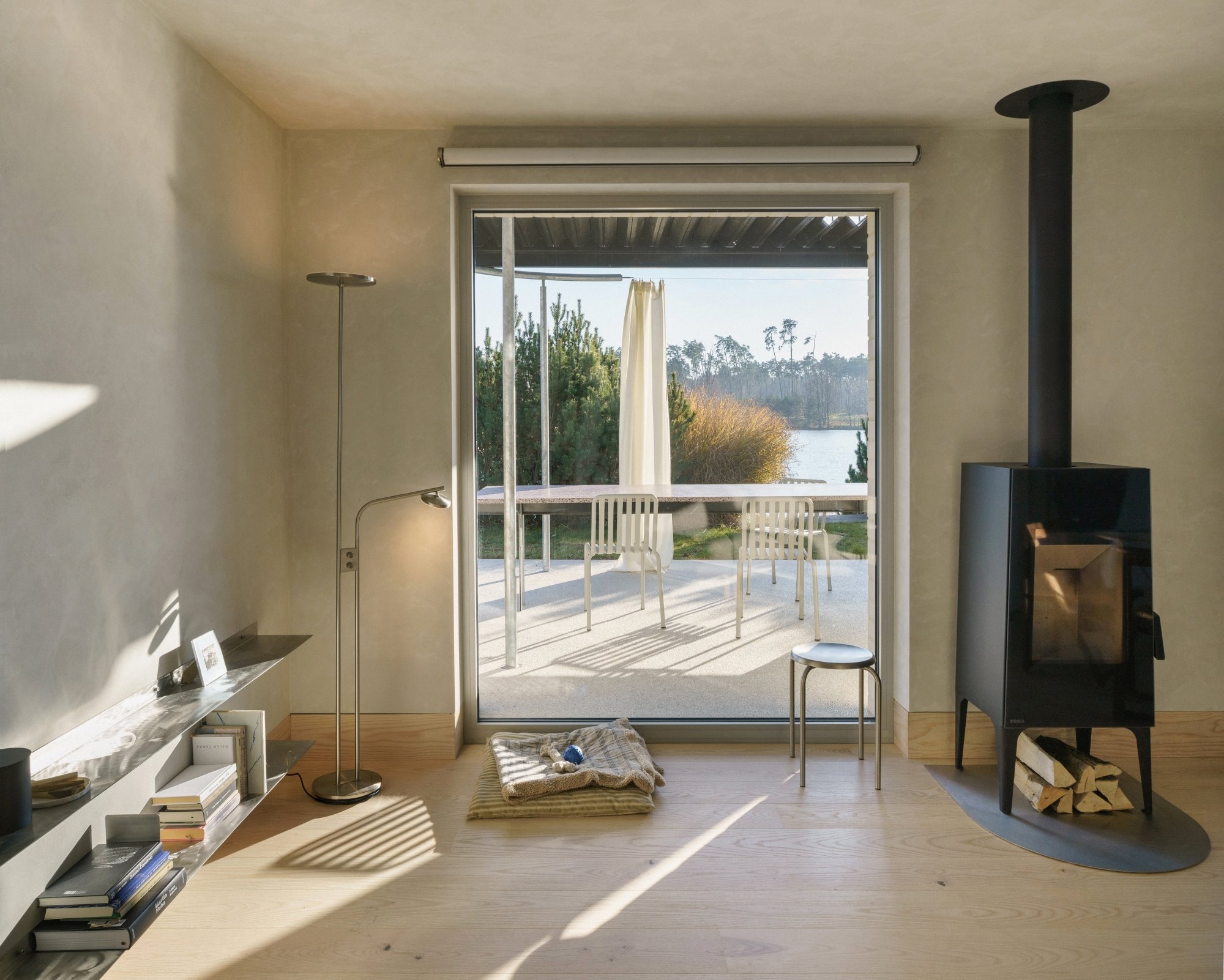
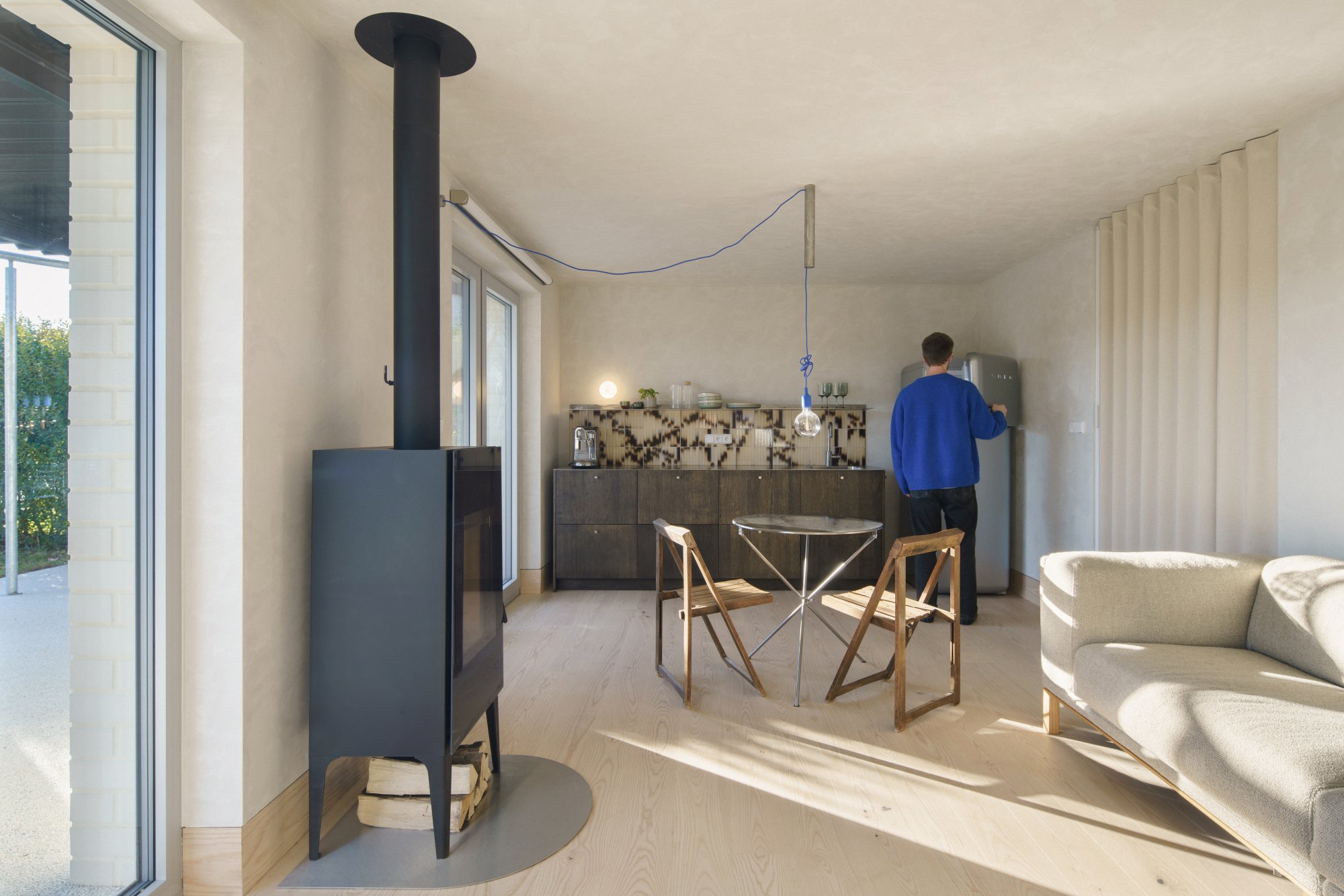
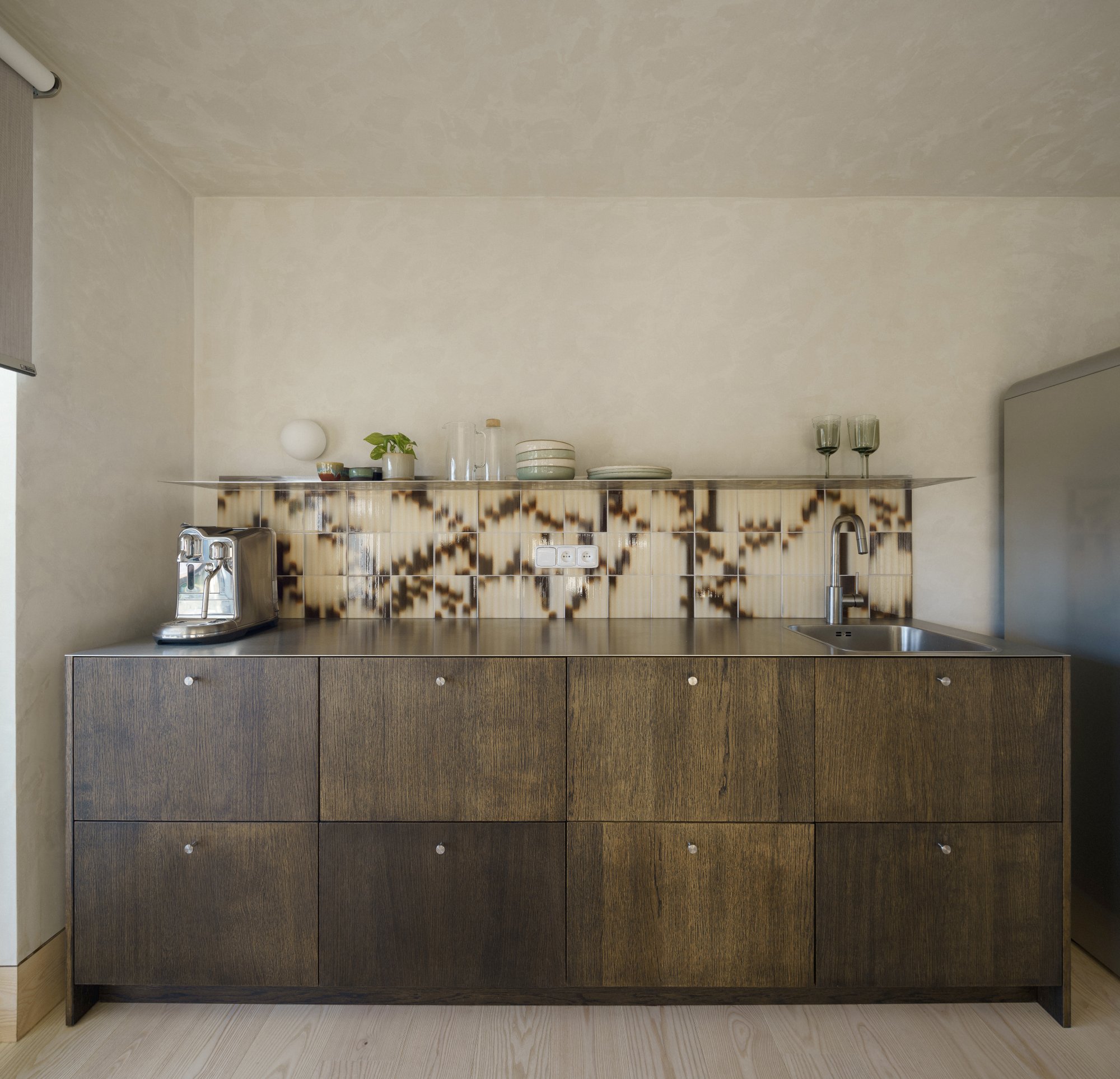
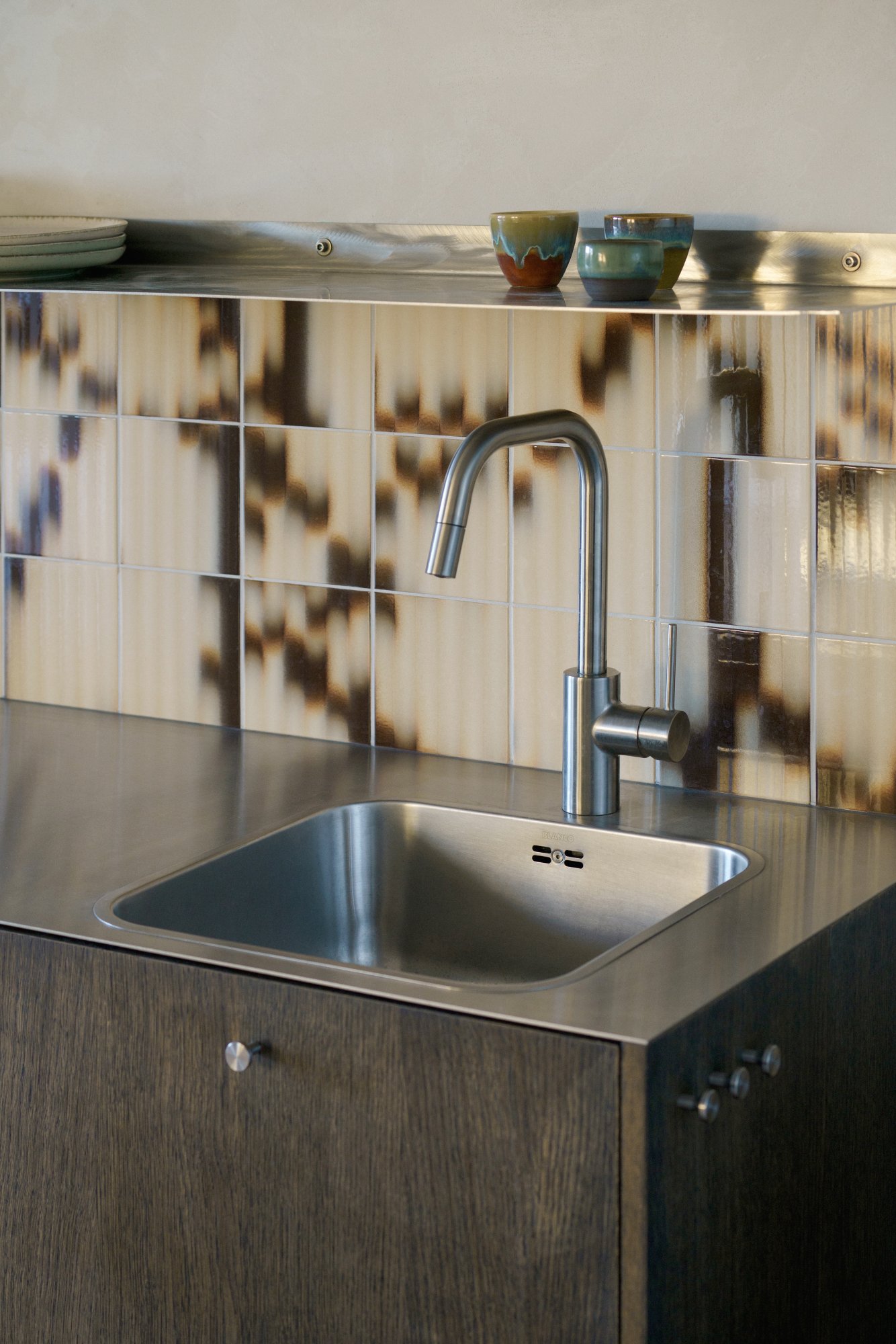
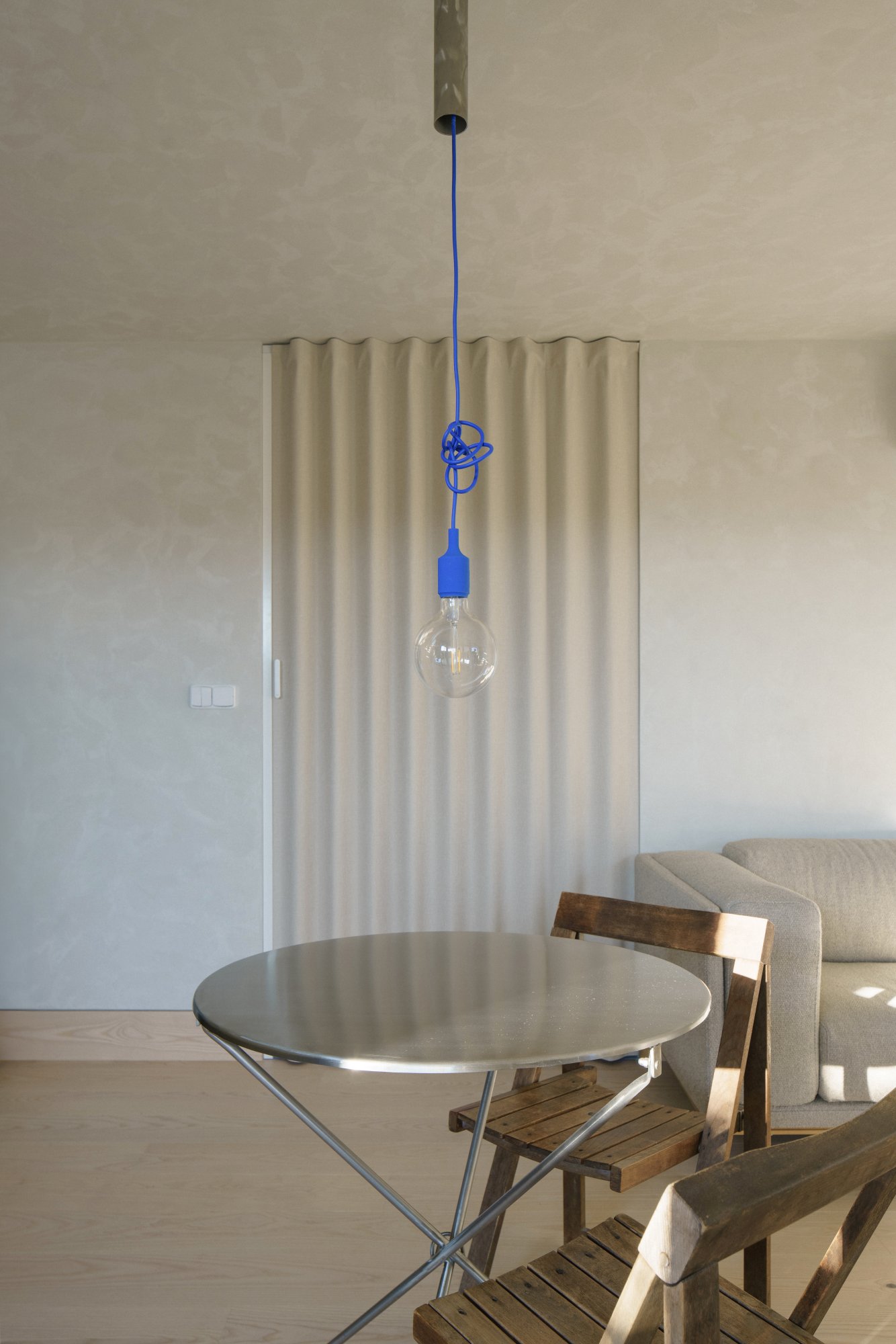
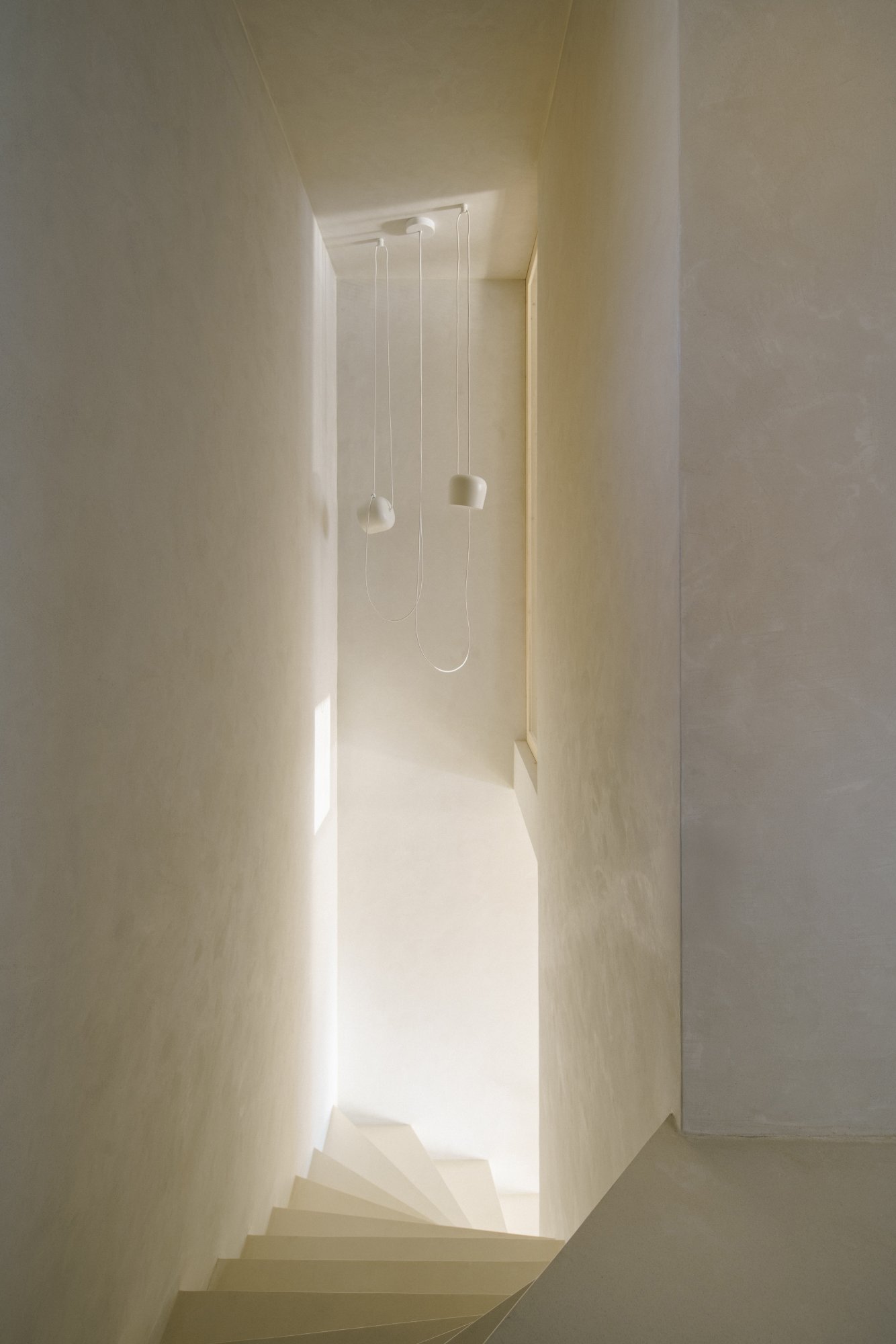
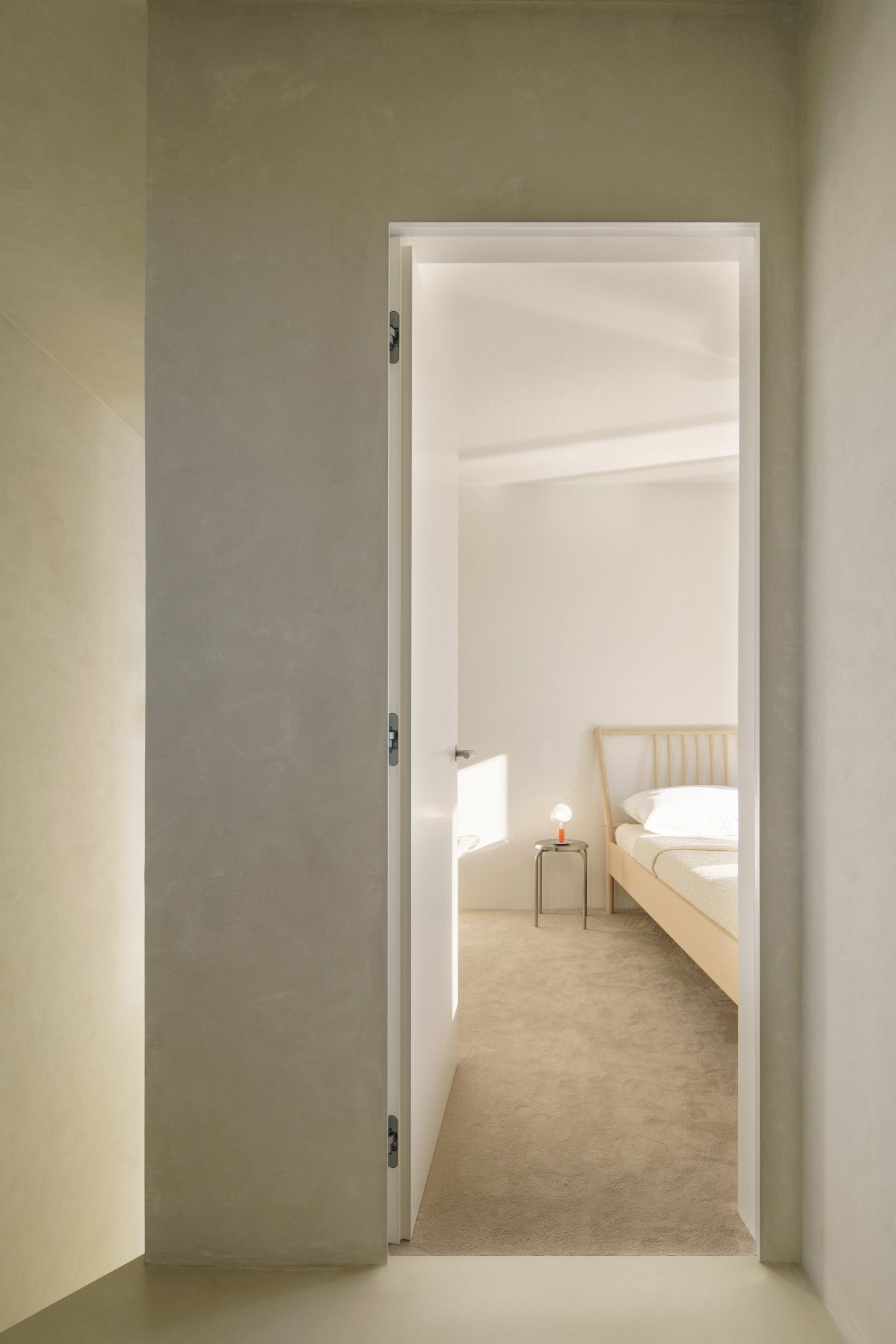
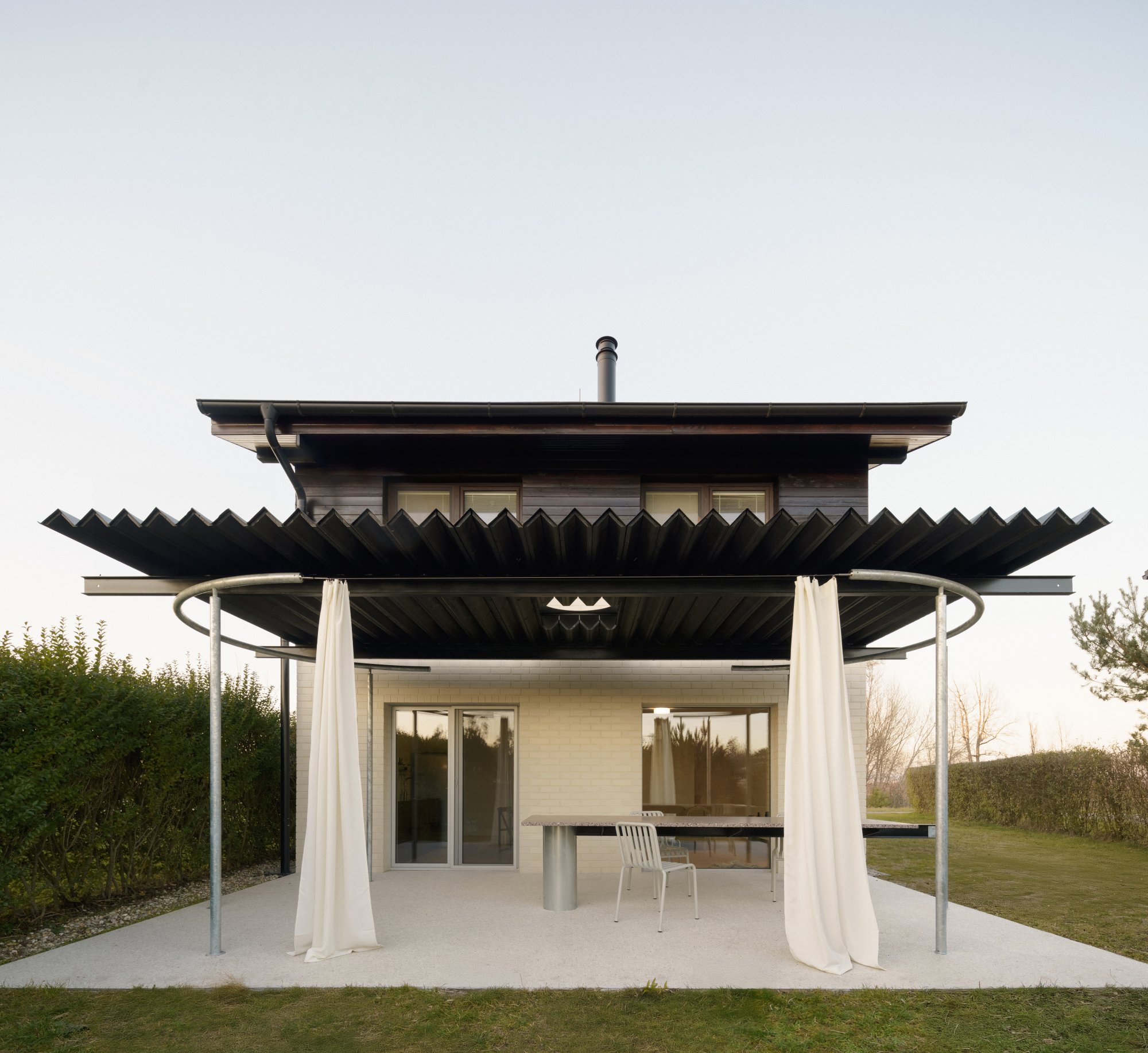
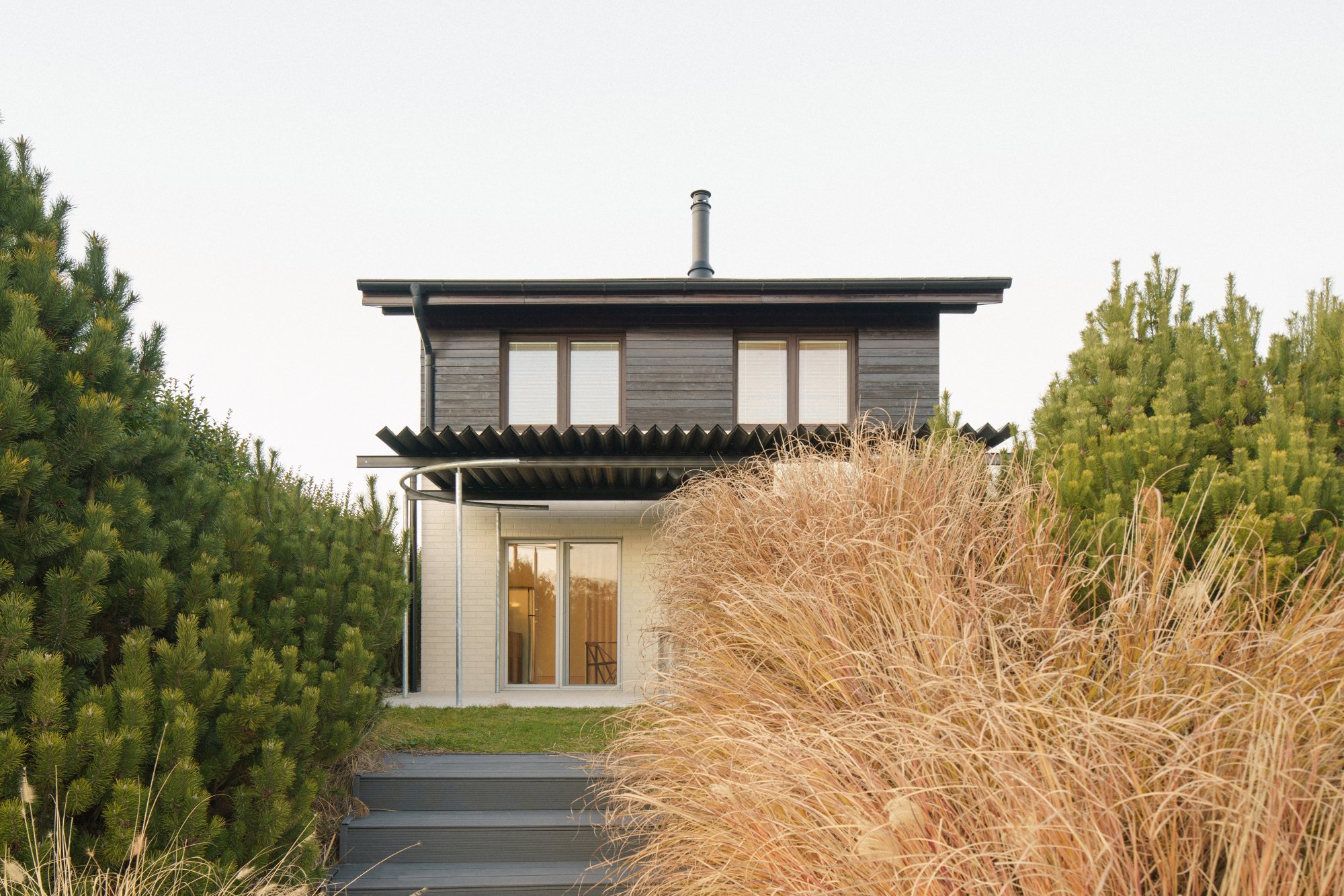
The reconstruction of a recreational cabin in the Záhorie region is grounded in respect for the existing context and the regulations governing the surrounding development. The exterior of the building underwent only a subtle facelift, as it was essential to adhere to the design manual of the area. Interventions to the façade are therefore restrained, focusing on material refinement and detailing rather than formal transformation.
The primary focus of the renovation shifted toward reconfiguring the interior layout and transforming the terrace into a key living space. By reducing the size of one of the rooms, it was possible to relocate the bathroom to the second floor, within the night zone where it had previously been absent. This move simultaneously freed space on the first floor for a fully functional kitchen connected to the living area.
This simple spatial “swap” divided the cabin into three clearly legible plan zones. Each zone operates with its own spatial logic and degree of autonomy, allowing individual parts to be functionally and operationally separated when needed, without creating spatial conflicts.
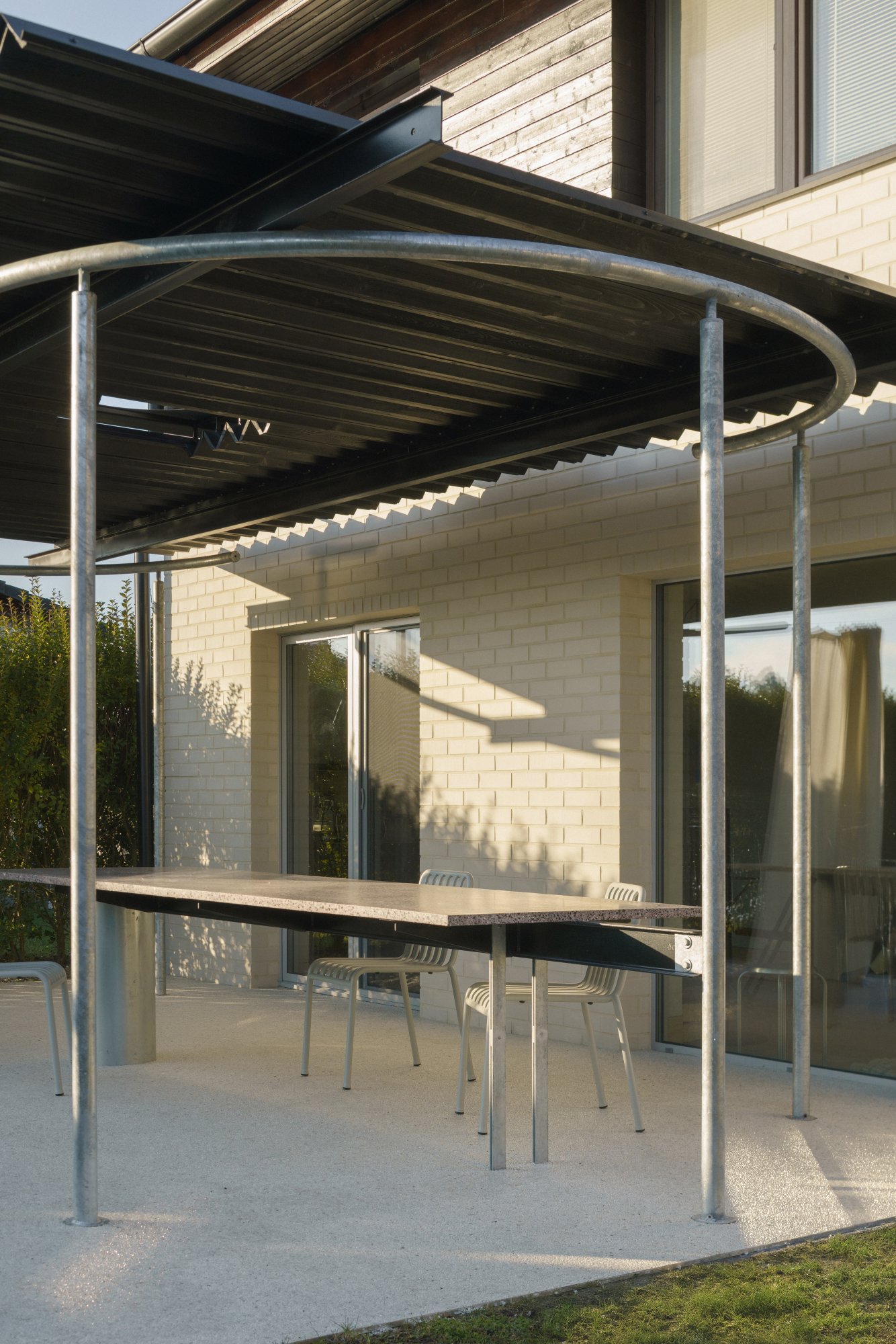
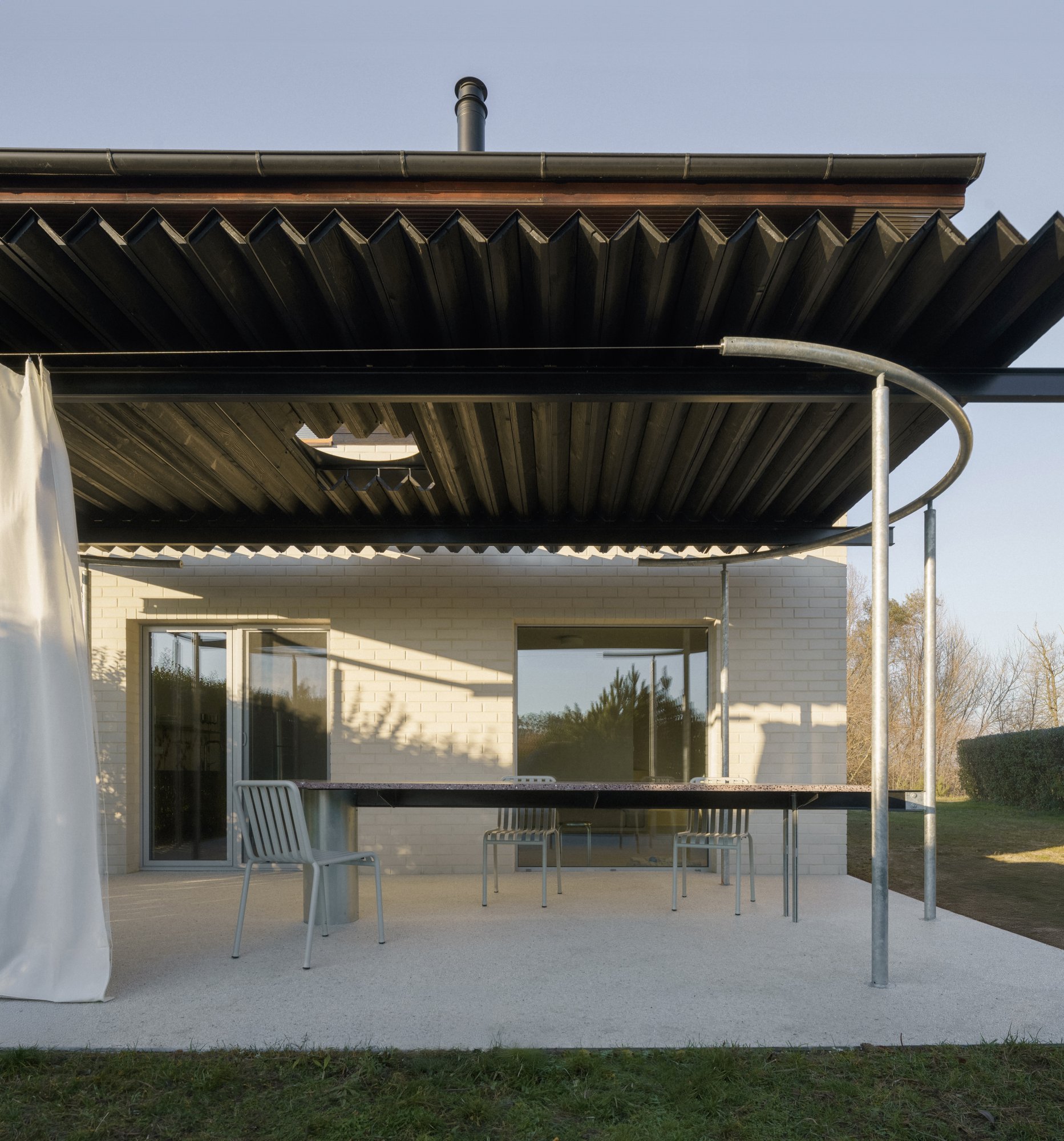
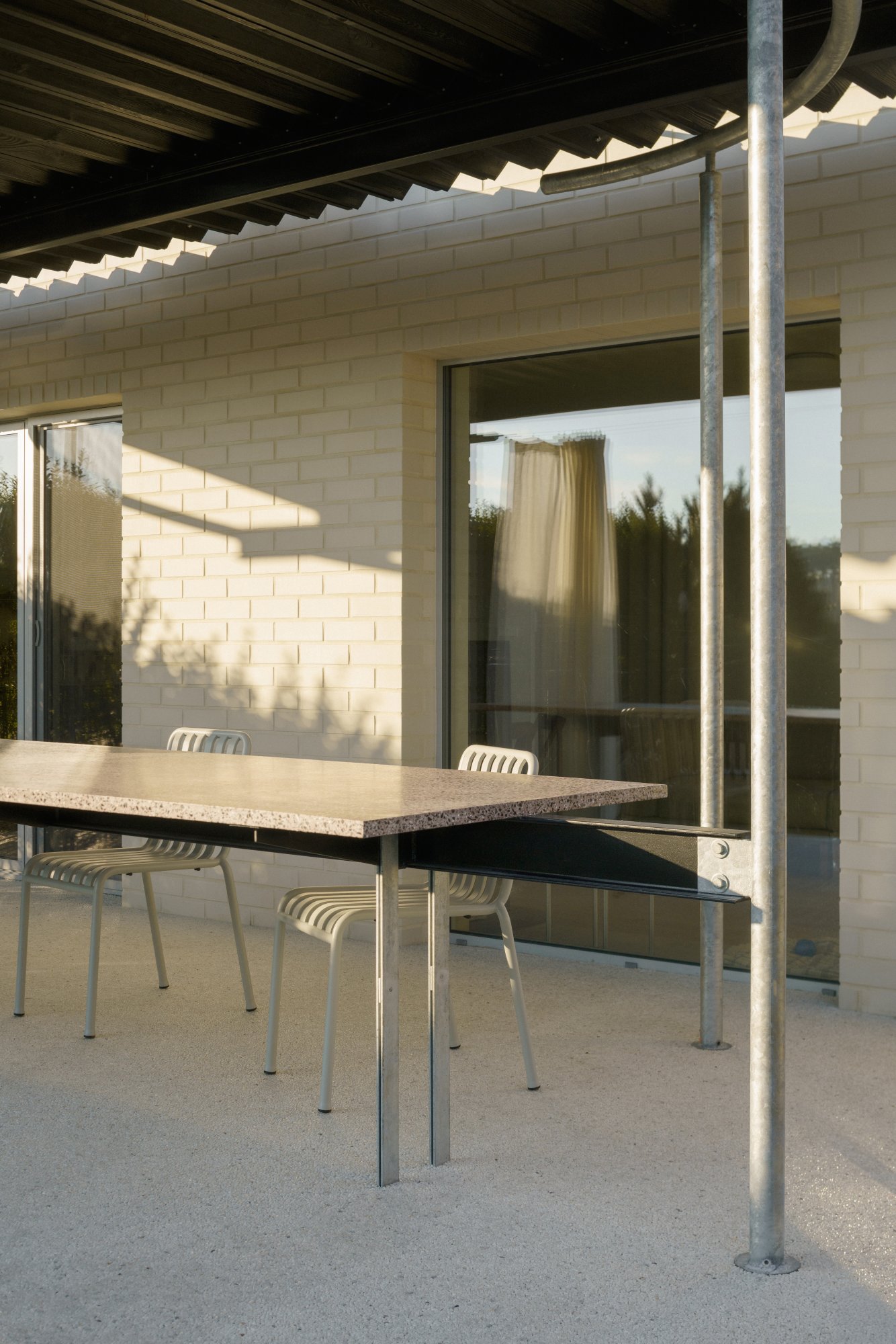
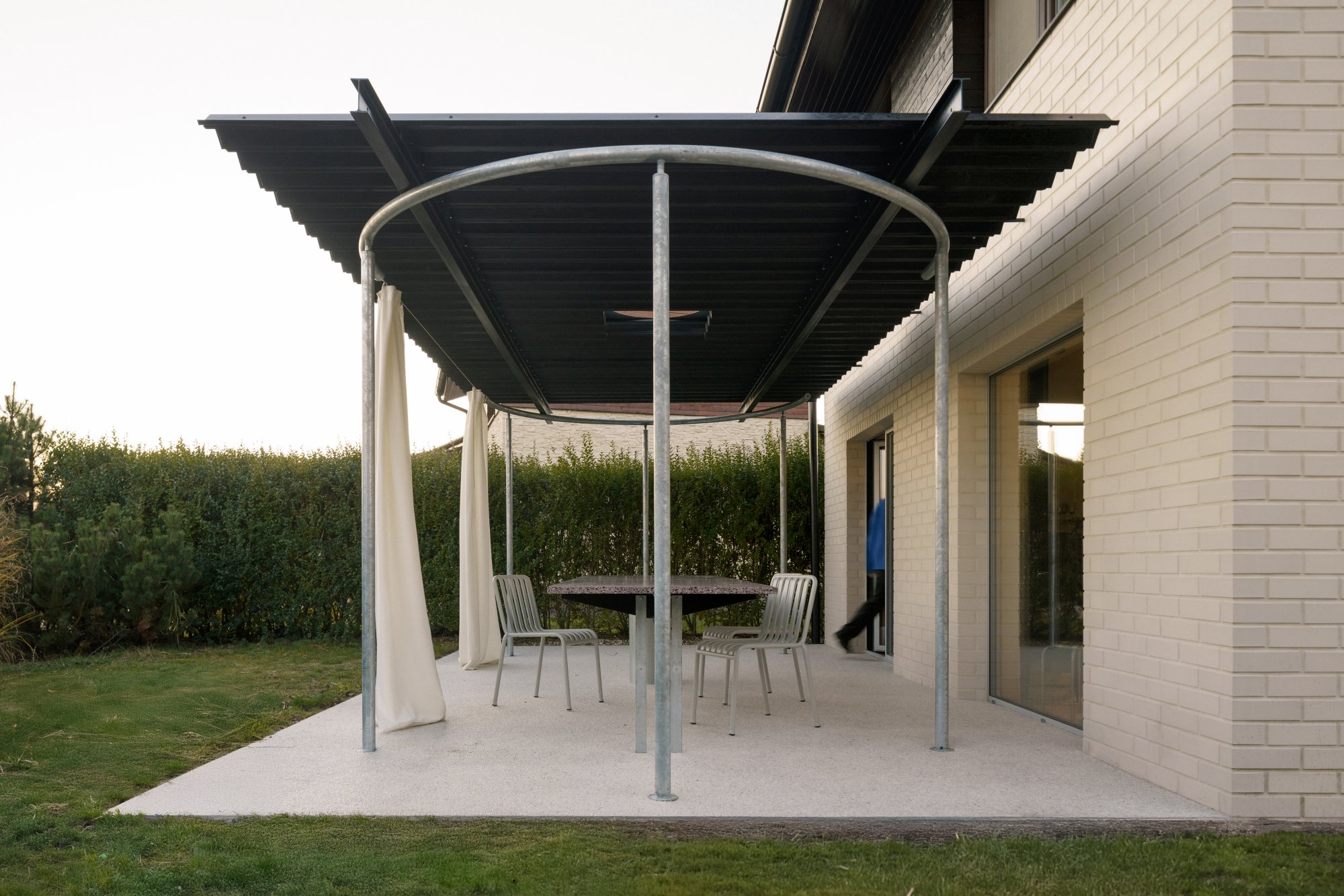
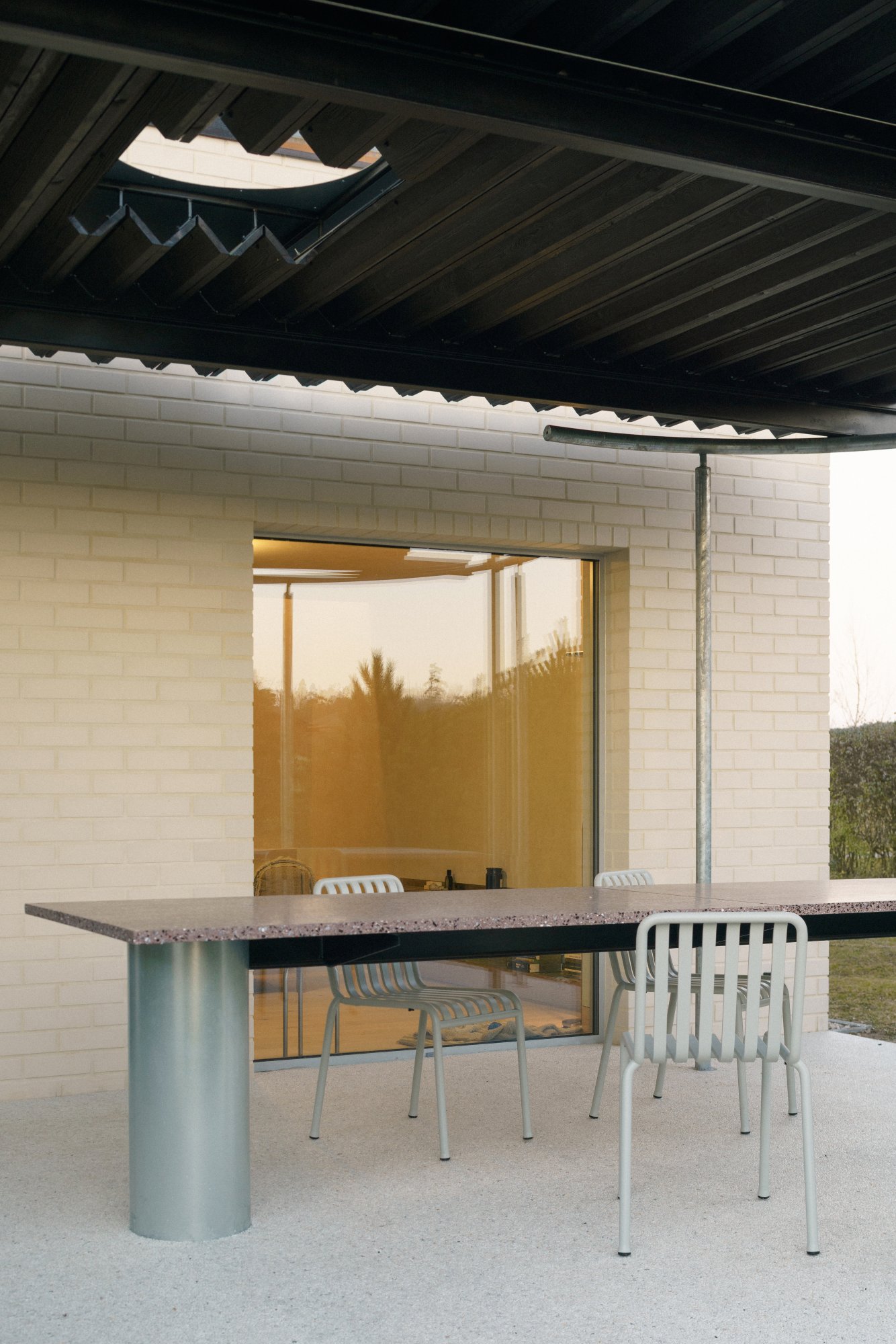
The exterior is complemented by a new pergola conceived as a three-part structure. It consists of three galvanized steel columns with semi-circular profiles, steel I-beams as lintels, and a pitched roof made of charred wood, which is also applied to the façade of the building. A subtle circular opening in the pergola roof functions as a skylight, illuminating the terrace while simultaneously bringing natural light deeper into the interior.